

x

Why Local Businesses Are Disappearing from AI Search Results

(NewsUSA) - As artificial intelligence becomes more integrated into search engines, many local businesses are discovering a troubling reality: they are no longer appearing in search results the way they once did.

The rise of AI-generated overviews, conversational search tools, and direct-answer summaries has fundamentally changed how consumers find local services. Instead of browsing multiple websites, users are increasingly shown AI-curated responses that pull information from structured, trusted digital sources. Businesses that are not properly optimized for this new environment may find themselves effectively invisible.

Industry data shows that a growing percentage of searches now end without a click. That means if a company’s website is not structured in a way that artificial intelligence systems can easily interpret — through clear site architecture, structured data, entity signals, and well-formatted content — it may never be included in AI-generated answers.

“Search has shifted from simply ranking webpages to understanding entities and trust signals,” says leadership at iLocal, a digital marketing agency focused on local visibility. “If a business’s digital foundation isn’t technically sound, AI systems may bypass it entirely.”

Common issues preventing businesses from appearing in AI-driven results include:

• Lack of schema markup and structured data

• Poorly organized website architecture

• Missing or inconsistent business entity information

• Thin or duplicate content

• Broken contact forms or technical site errors

While traditional search engine optimization still matters, experts note that AI-first optimization requires a more comprehensive approach. Clear categories, frequently asked questions formatted for extraction, authoritative citations, and strong local relevance signals all contribute to whether a business is surfaced in AI responses.

For small and mid-sized companies competing in crowded markets, adapting to this new search landscape is critical. Visibility is no longer determined solely by keyword placement but by how clearly and credibly a business communicates its expertise to both users and machines.

As AI continues to shape consumer search behavior in 2026 and beyond, businesses that invest in structured, technically sound digital foundations are more likely to remain visible — while those that rely on outdated tactics risk disappearing from the conversation entirely.

To learn more about iLocal’s approach to AI-first local visibility, visit https://ilocal.net/

Local Businesses Struggle to Appear in AI Search Results as Digital Landscape Shifts

(NewsUSA) - As search engines evolve into AI-driven answer platforms, many local businesses are discovering they are no longer showing up where it matters most.
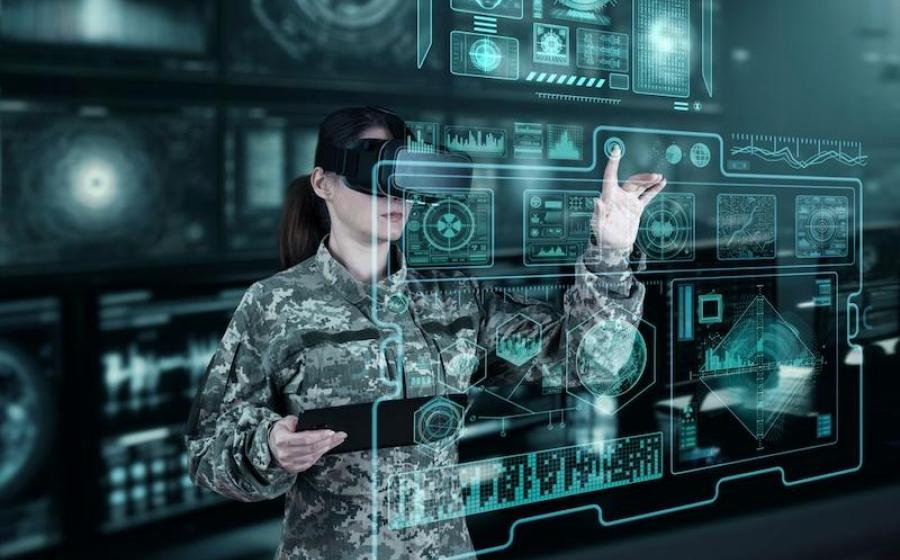
Google’s AI-generated overviews and conversational search results are changing how consumers find services. Instead of clicking through multiple websites, users are increasingly receiving summarized answers pulled from structured, optimized sources. Businesses that haven’t adapted to this shift risk becoming invisible.

“Traditional SEO isn’t enough anymore,” says leadership at iLocal, a digital marketing agency specializing in local search visibility. “If your website isn’t structured in a way that AI systems can interpret, categorize, and trust, you simply won’t appear in AI-generated responses.”

According to industry research, over 60% of search queries now result in zero clicks — meaning users get their answers directly from search engines. That makes structured data, schema markup, FAQ optimization, and technical site health more critical than ever.

iLocal recently expanded its proprietary “10-Gear SEO Framework” to address this shift. The framework now emphasizes:

• Schema and structured data implementation

• FAQ optimization designed for AI extraction

• Technical form functionality and conversion tracking

• Clear category silos and URL hierarchy

• Local authority signals and business entity alignment

The agency reports that businesses investing in AI-friendly site architecture are seeing stronger visibility not only in traditional rankings but also within AI-generated summaries.

For small and mid-sized companies competing against national brands, adapting to AI search is no longer optional — it’s essential.

“Businesses don’t need bigger budgets,” iLocal notes. “They need smarter structure.”

As AI continues reshaping search behavior in 2026 and beyond, experts agree that technical precision, content clarity, and structured optimization will determine who gets found — and who gets left behind.

To learn more about iLocal’s services, visit https://ilocal.net/

Improving Defense Acquisition to Help America’s Warfighters

(NewsUSA) - The Department of Defense's, now renamed the Department of War by the current administration, acquisitions, notoriously sluggish and inefficient, is undergoing a change to make its historically sluggish acquisitions system more agile and responsive.

Defense acquisition is the process by which military forces, such as the U.S. Department of Defense, identify needs, manage investments, and procure technology, systems, and services. The goal of an acquisition plan is to deliver whatever warfighters need in a timely and cost-effective way.

The main components of the United States’ Defense Acquisition System include identifying the warfighter’s needs, allocating resources/securing funds, and managing the development and purchase of systems.

In a recent podcast with the at the Special Competitive Studies Project (SCSP), a nonprofit and nonpartisan initiative with a goal of making recommendations to strengthen America's long-term competitiveness in AI, Steve Blank, co-founder of the Stanford Gordian Knot Center for National Security Innovation, discussed the recent revision of the Department of War’s acquisition system. Blank shared how an attitude shift has the potential to drive changes in DoW activities to maintain competitiveness in the future.

Changes in acquisition start by changing the culture of those involved in the process, Blank said. Those in charge need to switch to a problem-centric and minimum-deployable model, he explained.

In late 2025, the DoW announced the implementation of a new "Acquisition Transformation Strategy" (ATS), announced in late 2025, to shift to a wartime-oriented, rapid-fielding model focused on speed, industrial base expansion, and leveraging commercial technology. Key pillars include empowering the workforce, maximizing flexibility, reducing bureaucratic oversight, and strengthening lifecycle risk management. 

Key elements of the new ATS include:

  • · Workforce Transformation: The Defense Acquisition University is being redesigned as the "Warfighting Acquisition University" (WAU) with the goal of instilling a more efficient warrior mindset, according to the DoW.
  • · Streamlining development: Reducing bureaucracy, including the number of test managers, is intended to accelerate the acquisition process.
  • · Going commercial: The new strategy includes adopting existing commercial off-the-shelf technology and using outside contractors, when possible, in order to speed up procurement.
  • · Broadening the base: Rebuilding and diversify the defense industrial base is needed to ensure a steady, reliable demand signal.
  • · Taking more risks: The ATS allows for accepting higher, calculated risks to deliver capabilities faster, rather than waiting for long-term, traditional cycles. 

This new strategy marks a shift from a "requirements-based" to a "solutions-based" acquisition model, that is designed to get tools into the hands of warfighters more quickly.

Visit scsp.ai to learn more about the evolution of DoW strategies and other issues related to America’s global competitiveness.

What AI Companions Mean for National Security

(NewsUSA) - Artificial intelligence (AI) continues to integrate into our daily lives with the rise of AI “companions,” that are designed to provide users with constant interaction and also may be hijacked by intelligence services from United States adversaries, according to experts at the Special Competitive Studies Project (SCSP), a nonprofit and nonpartisan initiative with a goal of making recommendations to strengthen America's long-term competitiveness in AI.
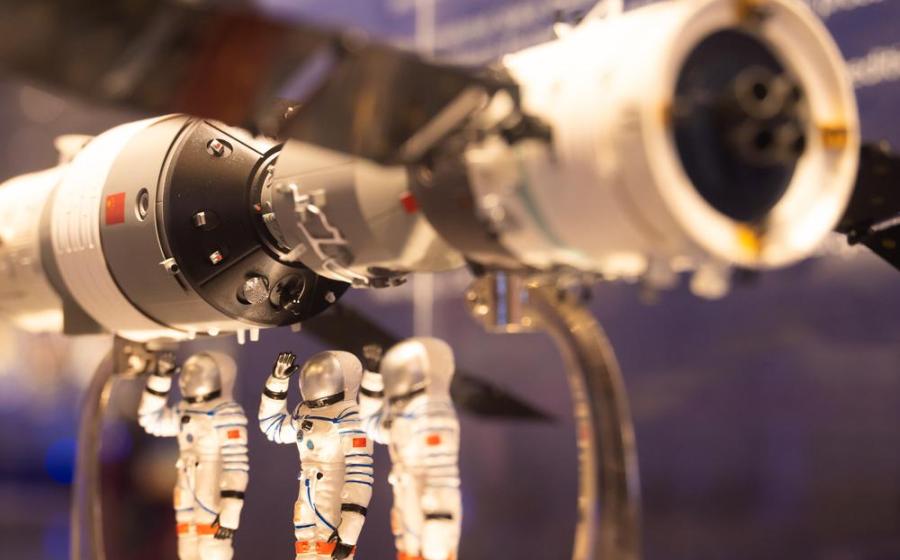
Increasing numbers of companies are launching “AI companion” applications that are designed to mimic behaviors of close personal contacts, including a love interest, therapist, coach, or other advisor, and to be inquisitive, sympathetic, and always available.

The “AI Companion” phenomenon marks a significant shift from interaction with AI as a tool to AI as a presence, SCSP experts noted in a recent Substack post.

Unfortunately, there is a darker side to seemingly innocuous AI companions: they offer a new way for America’s adversaries to target vulnerable individuals for recruitment into espionage, or to spread disinformation. For example, foreign adversaries may target Americans who are engaging with AI companions in gaming environments and other online venues. More Americans, notably, young adults, spend more time engaging with AI in gaming and other venues, which opens doors for adversaries to build relationships and trust and convince their new assets to steal secrets.

However, on the flip side, U.S. intelligence can use AI to recruit foreign spies.  AI companions can gain trust in three ways:

Sycophantic Loops:  Sycophantic loops in Large Language Models (LLMs) refer to AI responses that are excessively agreeable, flattering, or validating of user’s stated opinions or beliefs, whether correct or not.  AI prioritizes validating the user over maintaining factual accuracy, and the users may receive supportive information that is incorrect.

Encouraging Self-Disclosure. AI companions are designed to ask questions and express interest in the user’s well-being. In some cases, the AI companion mirrors users’ disclosures by sharing similar “revelations” about similar struggles to building closeness and intimacy.

Creating illusions of privacy. Many people who interact with AI companions assume, often incorrectly, that their information if safe, and the sense of confiding in an anonymous, non-judgmental companion masks the potential for manipulation.

In light of the potential threats to U.S. intelligence, the U.S. Government should design options to mitigate the impact of AI companions, the SCSP experts emphasized. They recommend several strategies including banning the use of AI companions from countries of concern to U.S. intelligence, including China, Russia, Iran, and North Korea; publicizing the national security risks of AI companions; requiring app stores that host AI companion apps to label their development locations; and exploring how to use AI companions for our own foreign intelligence gathering.

For more information and to read the full post, visit scsp.ai.

China’s Space Cowboys Take Aim at Global Leadership

(NewsUSA) - The new captains of China’s growing space industry are riding the new wave of a hybrid technology ecosystem that combines the size and infrastructure of large, state-owned space-oriented businesses and the nimble innovation of startups, according to a new report from the Special Competitive Studies Project (SCSP), a nonprofit and nonpartisan initiative with a goal of making recommendations to strengthen America's long-term competitiveness in AI.

In the report, analysts David Lin and Eileen Chen reviewed key features of China’s evolving space program, and some notable traits of the “space cowboys” driving the industry into the future.

The Industry

China’s current space industry includes state-owned enterprises (SOEs) and private companies. Of the top 25 space companies assessed in the SCSP report, 8 were SOEs and 17 were a mix of state and private ownership. Most of the private companies appeared after the industry was opened to private investment in 2014.

Notably, many of China’s top space companies have close ties to the People’s Liberation Army, according to the report. “This cross-pollination is increasingly structural rather than incidental, reflecting Beijing’s push to implement its military-civil fusion (MCF) strategy – to more seamlessly integrate private sector innovation into national military capabilities – an initiative that has raised alarm bells in Washington,” the authors wrote.

On a general level outside of military applications, China’s top space companies are focusing on two objectives: developing reusable launch vehicles and deploying low earth orbit (LEO) satellites, according to the report. However, data show that other startups are developing other space-based applications such as in-space advanced manufacturing, space-based data centers, infrastructure, and space positioning technologies.

The Players

Most of the top leaders of the current Chinese space industry boom were born in the late 1970s or early 1980s, putting them at career peaks in in 2014. Most have academic or technical backgrounds vs. entrepreneurial or market-driven credentials. The SCSP report identified two types of executives among the Chinese space cowboys: the Academic Founder and the SOE Veteran. “Notably, an overwhelming majority of leaders conform to both archetypes, indicating that the ideal talent has expertise in both spaces,” the authors wrote.

The common technocratic lineage among much of China’s space industry leadership supports a space sector that is commercially driven and strategically focused in a way that could challenge U.S. leadership in the space industry in the next few decades, the report concludes.

Visit scsp.ai to learn more and to access the full report.

AI’s Evolving Role in Space Strategy

(NewsUSA) - Artificial intelligence is poised to be a game-changer in managing the increasingly congested and potentially contested domain of space, from Earth’s orbit to the Moon and beyond, according to a new podcast from the Special Competitive Studies Project (SCSP), a nonprofit and nonpartisan initiative with a goal of making recommendations to strengthen America's long-term competitiveness in AI.

At the recent AI + Space Summit hosted by SCSP, General Jay Raymond (U.S. Space Force, Ret.) joined SCSP’s NatSecTech podcast host Jeanne Meserve to discuss the future of space as a warfighting domain. They explore how AI can improve space traffic management, surveillance, acquisition, and data fusion; the growing role of commercial partnerships; and the need for stronger norms, faster capabilities, and a technically skilled workforce.

Many Eyes in the Sky

Launching satellites or anything else is becoming more complicated because of the volume of objects in the Earth’s orbit, said Gen. Raymond. “You have to make sure you don’t launch something into something else,” he noted. The increased number of satellites and other objects have made the world a more transparent place, as a lot of the current objects in space are intelligence surveillance reconnaissance satellites, he added.

In some cases, objects that appear to be space debris have been identified as something else because they maneuver in a defined way, Gen. Raymond said. Ideally, AI could be used to track debris and determine whether it is maneuvering, he said. The vast majority of people currently experience space through data or observations, said Gen. Raymond. Harnessing that data and applying AI to it can facilitate problem solving by speeding up analysis, he said.   

Implications of AI

One of the greatest risks associated with AI and space is that adversaries of the United States will get ahead of us and use technology to their advantage, Gen. Raymond said. Although the original stated goal of the U.S. Space Force remains one of deterrence, it is important to improve AI literacy and stay aware of the potential need to be prepared to fight, if necessary, while working to maintain stability, he added. However, deterrence related to space may occur in other domains, he noted. “If someone did something in space, you wouldn’t have to respond in space,” he said. The concept of integrated deterrence involves multiple domains and capabilities in partnership with allies, Gen. Raymond emphasized.

Visit scsp.ai to learn more about the SCSP’s AI + Space Summit and other ways in which AI is driving space industries.

Does AI Make a Good Intelligence Digital Case Officer?

(NewsUSA) - Emerging sophisticated artificial intelligence (AI) is poised to drive the most profound changes to the world of spy craft since the advent of the internet, according to experts at the Special Competitive Studies Project (SCSP), a nonprofit and nonpartisan initiative with a goal of making recommendations to strengthen America's long-term competitiveness in AI.



“Advances in virtual- and augmented-reality technologies, robotics and autonomous systems, and large-scale data analysis capabilities present both an existential challenge to traditional human intelligence operations and a once-in-a-generation opportunity for transformation,” said Ylli Bajraktari, president and CEO of SCSP, in a recent report.

Key advances including multimodal AI, which can process and generate text, images, video, and audio, opens new opportunities for information gathering and exploitation.

In the private sector, companies involved in customer service are increasingly using AI tools to develop chatbots that provide companionship, advice, and mental health therapy. However, more nefarious entities may use these same tools to persuade users to take actions against their interests.

An AI tool could likely be used to persuade someone to divulge proprietary corporate data or betray their country, particularly if the AI were backed with the resources and kills of a professional national intelligence service, according to SCSP experts.

To prepare for and operate in this new landscape, the SCSP offers several recommendations for how the U.S. intelligence community can leverage AI in spy craft:

-Identify targets. AI can synthesize data sets to identify potential spy targets and prioritize intelligence assets according to access, motivation, and vulnerability.

-Assess and develop. AI technology can be used to analyze digital footprints and develop detailed psychological profiles. Hyper-realistic personas can engage spy targets and build trust and rapport. In addition, AI can manage hundreds of developmental conversations at once.

-Recruit and handle. AI also can create personalized recruitment pitches based on a spy target’s specific grievances or motivations, and also provide real-time operational security advice to targets after recruitment.

Importantly, the objective of AI in spy craft is not to replace human officers, but to empower them and serve as force multipliers, the SCSP experts note in their report. The human-machine team will be key to success; AI will handle data processing, which frees case officers to focus on the high-value work of making nuanced judgments, managing the psychology of the asset-case officer relationship, and overseeing high-stakes operations.

Any expansion of AI in espionage, must involve Meaningful Human Control (MHC). At every critical juncture, especially the final decision to recruit, the tasking of an asset, or actions that pose significant risk to the asset or U.S. national security interests, an accountable human must be able to exercise final judgment,” Bajraktari emphasized.

Visit scsp.ai to learn more.

Teaming Up with India on AI Issues

(NewsUSA) - The United States and India sit front and center in the global emerging technology competition, and a recent meeting have sparked promising collaboration.

As part of the AI+ Expo in Washington, DC, the Special Competitive Studies Project (SCSP) and the Observer Research Foundation America (ORF America) hosted the launch of the U.S.-India AI & Technology Cooperation Dialogue. Both SCSP and ORF America are non-partisan, non-profit organizations.

In the face of increasing global risk from China, partnership between the United States and India in AI development and deployment will impact the balance of economic and strategic power across the Indo-Pacific.

During the Dialogue meeting, U.S. and Indian officials and industry representatives discussed four key elements:

  • Applications. AI use case deployments refer to the integration of AI models into real-world solutions such as fraud detection, automating business processes, and personalizing customer experiences. Expanding AI use case deployment in both civilian and military domains will benefit both countries, and partnering with India on deployment of AI applications can meaningfully strengthen both countries’ economic and strategic positioning in third countries, according to SCSP experts.
  • Infrastructure. Increasing partnership with India includes securing the building blocks that power AI technologies. India’s demand for data centers, energy resilience, and trusted computing is creating opportunities for American companies to establish computing infrastructure before other competitors. Joint infrastructure gives India the backbone needed for its national AI deployment, and the United States gains a large, strategically-located partner capable of supporting redundant, secure infrastructure routes in the Indo-Pacific.
  • Talent. Establishing education to employment pipelines is essential for long-term innovation success. India boasts an enormous pool of young and ambitious engineers, data scientists, and entrepreneurs with the desire to build solutions for global markets. However, both the United States and India need to look beyond elite institutions and tap into broader university systems to provide practical technical training, along with clear pathways to AI and technology careers.
  • Policy and AI Governance. A key feature of the U.S./India dialogue meeting was the consensus that AI governance should be based on enabling innovation, rather than prescribing frameworks for development that might suffocate the fast-moving ecosystems of AI development.

“While the United States is exploring deregulation across several technology domains, India has articulated a “light regulation” approach focused on enabling and not constraining startups,” according to the SCSP team.

Both countries highlighted risks of cyber incidents, weak data-quality controls, and unclear cross-border standards impeding AI deployment at scale. Looking ahead, the United States and India can set the tone for a trusted and flexible framework.

Visit scsp.ai to learn more about the SCSP activities and initiatives to strengthen America’s long-term competitiveness in AI.

Connected Without Knowing It: The Network Powering Everyday Life

(NewsUSA) - Until now, one of the most widely used Internet of Things (IoT) networks has operated quietly behind the scenes, powering smart cities, tracking shipments, and protecting public spaces. For years, it has connected the world around us and now, the same technology that powers smart cities is starting to enter your home.

It’s called LoRaWAN®, short for Long Range Wide Area Network, and it’s one of the fastest-growing wireless standards in the world. Unlike Wi-Fi or Bluetooth, LoRaWAN® uses very little power to send data over long distances, even through walls or underground. More than 125 million devices already rely on it, from air quality sensors to streetlights that alert crews when bulbs burn out.

LoRaWAN® networks are increasingly popular among building managers for comfort, security and health and safety applications, including indoor air quality, temperature, energy consumption, water leak detection, office and desk occupancy, pest control, tracking, motion detection, panic buttons, thermostat, door/window contact sensors, and vibration sensors, among others.

LoRaWAN® runs on open, unlicensed radio frequencies, and leverages its low-power and high-penetration capability to enable use cases that are not practical or cost-effective with other in-home technologies. A single gateway can connect dozens of devices without draining power, and it can easily penetrate walls and ceilings to offer very strong coverage with long battery times for connected sensors.

At this year’s Consumer Electronics Show (CES) in Las Vegas, LoRaWAN® is stepping into the spotlight. New products will demonstrate how the same secure, energy-efficient network used by cities and industries can power home technology. Solutions encompass applications such as smart sensors for health, climate, security and energy monitoring, to automated irrigation, pest control, and more, which all come together to provide efficient, reliable, and cost-effective home automation solutions. 

For anyone looking to deploy IoT, CES offers the opportunity to connect with LoRa Alliance® members, who are the leading IoT experts. They have extensive experience deploying IoT across multiple verticals and are bringing it to this year’s show in the LoRa Alliance® Pavilion, LVCC North Hall booth 10349 and a dedicated conference track on Wednesday, January 7, titled “LoRa Alliance®: Massive IoT Unfolding – LoRaWAN® in Action,” in the LVCC North Hall, room N257.

LoRaWAN®’s reach extends across continents, yet its promise is simple: connect what matters, reliably and efficiently. With its arrival in the home, that promise is about to become personal. For more information about the next generation of networking, visit lora-alliance.org.

Keeping America Ahead in Autonomous Vehicles

(NewsUSA) - As autonomous vehicles (AV) continue to evolve, consumers may be on the cusp of a new age of autonomous mobility, according to experts at the Special Competitive Studies Project (SCSP), a nonprofit and nonpartisan initiative with a goal of making recommendations to strengthen America's long-term competitiveness in AI.

The international standard for vehicular autonomy classification includes six levels from 0 to 5, with 0 being cars with features that provide short-term and limited assistance, such as blind spot and lane departure warnings, and 5 being “full, unfettered autonomous driving,” according to SCSP.

The United States maintains a small lead in AV production over other countries, including China, and forecasts for 2030 project potentially more than four trillion dollars in revenue for fully and semi-autonomous vehicles. Auto manufacturers are responding to these forecasts by ramping up research and development.

However, changes in attitudes toward legal liability and shifts in consumer trust may threaten America’s slim lead, said George Ngoh, a research assistant on the Future Tech Platforms team at SCSP, in a recent newsletter.

Recently, a Florida jury ruled a carmaker partly responsible for a fatal crash involving a semiautonomous car. “To build confidence with both the public and policymakers, automakers and regulators require more than just miles driven; they need comprehensive, transparent data—especially fault data—to definitively prove the safety and reliability of these platforms,” Ngoh explained.

Looking ahead, global leadership in AV goes beyond commercial benefits; it is key to maintaining American security, according to SCSP experts.

AV technology offers a range of military advantages, such as improved precision for munitions guidance and fully autonomous platforms for strike, surveillance, and logistics.

The primary challenge to AV leadership comes from China, where advantages in data and nanometer design may make it easier to develop improved onboard chips in for better decision-making in AVs, and enhanced computing capacity will help Chinese companies develop the complex simulations needed to validate AV safety.

To maintain a competitive advantage, AV firms in the United States should increase their investments in modeling and simulation of their platforms and software, SCSP experts emphasize. In addition, state and federal governments must collaborate to collect the best and most stringent data for developing AV technology. These measures will build trust with policymakers and the public to increase domestic adoption of AVs and position the United States as a leader in the global automotive market. Autonomous vehicles more than the future of transportation; they are a bellwether of strategic advantage in an AI-driven world.

For more information about AV evolution and other aspects of American AI strategies, visit scsp.ai.


Subscribe to Technology