A Strategic Partnership Between the U.S. and India Benefits Both Countries
(NewsUSA) - During Vice President Vance’s visit to India in early 2025, he emphasized the deep connection and shared vision for the future between the two nations, highlighting the need to build together as global partners based on fairness and shared national interests, said Ylli Bajraktari, President of the Special Competitive Studies Project (SCSP), a nonprofit and nonpartisan initiative with a goal of making recommendations to strengthen America's long-term competitiveness in AI.
Mr. Bajraktari visited India at the same time as the vice president, and he shared reflections in a recent newsletter based on his interview with Dr. S. Jaishankar for the latest episode of SCSP’s Memos to the President.
Sustained public investment in India's physical, social, and digital infrastructure is powering a resurgence in national strength. Going forward, a mutually beneficial relationship between the U.S. and India is multifaceted and involves capitalizing on opportunities in military partnerships, commerce, and technology, Bajraktari said.
Defense deals. Military collaboration between the U.S. and India includes expanding defense sales, co-production, and accelerating technology cooperation across space, cyber, and emerging domains. Negotiations for a Reciprocal Defense Procurement (RDP) agreement are underway.
Trade terms. Both governments are working on a trade agreement that focuses on job creation, durable supply chains, and worker prosperity, with a goal to more than double bilateral trade to $500 billion by the end of the decade. The partnership is framed as a win-win that benefits workers and businesses in both nations.
Energy efforts: Strengthening energy ties is directly linked to AI ambitions in India, and seen as essential for economic independence and national security. “The United States, with its abundant resources, aims to increase energy exports to India, which will enable India to grow at lower energy costs,” Bajraktari said. The United States seeks to help India explore its own reserves, including offshore natural gas and critical minerals, and potential amendments to India’s civil nuclear liability laws would allow U.S. producers to explore small modular reactors (SMRs) and build larger reactors in India.
Technology trust: Technological collaboration extends beyond defense and energy, Bajraktari said. The U.S.-India TRUST (Transforming the Relationship Utilizing Strategic Technology) is one example; this initiative builds on billions of dollars in planned investments by U.S. companies in India across sectors as diverse as data centers, pharmaceuticals, and undersea cables. The partnership aims to leverage the U.S. lead in AI hardware and India's vibrant startup ecosystem and vast talent pool.
The century of the U.S.-India relationship is here, Bajraktari emphasized. With the right framework, a focus on tactical execution and accelerated collaboration in the technology sector will be key to transforming ambition into a shared reality, securing prosperity and stability for both nations and the world.
Visit scsp.ai to learn more.

 - The Intellectual Property Owners Education Foundation (IPOEF) launched IP Buddy (
 - The AI+ Expo, taking place on June 2-4 in Washington, D.C., seeks to spark discussions of ideas and initiatives related to the intersection of AI, emerging technology, and national security.
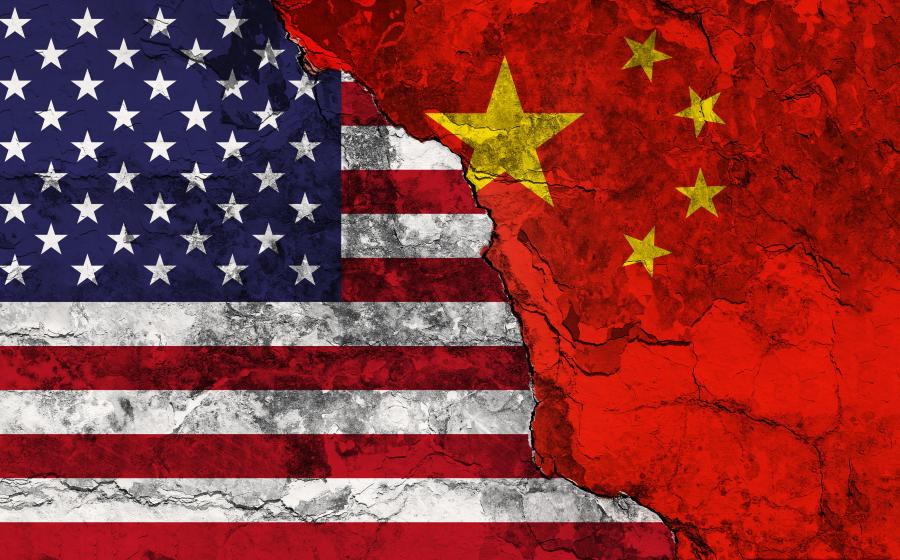
 - The United States was once the global leader in science and technology, but now other countries, notably China, are catching up, in part by leveraging data through artificial intelligence, according to experts at the Special Competitive Studies Project (SCSP), a nonprofit and nonpartisan initiative with a goal of making recommendations to strengthen America's long-term competitiveness in AI.
 - The development of technical standards is an often overlooked, but is an essential element in global technology leadership. The United States must be proactive to develop these standards, in addition to technology research and innovation, to stay ahead of our top competitor, China, according to Ananmay Agarwal, an expert at the Special Competitive Studies Project (SCSP), a nonprofit and nonpartisan initiative with a goal of making recommendations to strengthen America's long-term competitiveness in AI.