

Parents Say Restricting Youth Access To Technology Alone Won't Solve Youth Mental Challenges; Could Have Unintended Consequences
(NewsUSA) - Growing concerns about the mental health of America’s youth have prompted renewed discussions about the role of smartphones, social media and other digital technologies. While some proposals focus on restricting access or outright bans, new national polling indicates that many parents and voters believe a broader strategy will produce better outcomes.
A recent survey commissioned by the Coalition to Empower our Future (CEF) found that seven-in-10 registered voters and nearly three-quarters of parents worry that policies centered primarily on banning or severely limiting young people's access to phones and technology could lead to unintended consequences. Instead of concentrating on a single issue, respondents expressed greater confidence in solutions that address the many influences on youth mental health.
The research, conducted by Mercury Analytics, included a nationwide survey of 2,000 registered voters, expanded polling among parents in California, New York and Texas, and a series of focus group discussions. Many parents participating in the study said that restricting technology by itself may fail to address deeper mental health challenges while leaving young people less prepared to use digital tools responsibly as they grow.
One parent from California noted, “I don’t necessarily support taking the phones away. It’s like solving a symptom but not necessarily the problem.” Another from New York said, “Speaking from my own experience, I was open with [my parents] about what I was doing. Bans, with no questions asked, are not a good solution because it’ll be like ‘okay, I’m not allowed to do this, so now I have more of an inclination to do this.’”
Survey participants consistently favored a more comprehensive approach. Nearly three out of four respondents said improving youth wellbeing requires collaboration among parents, educators, healthcare professionals, community organizations and policymakers rather than relying on a single policy solution.
The findings also highlighted widespread support for digital literacy. More than 80 percent of voters and almost 90 percent of parents agreed that children and teens should receive instruction on how to safely and responsibly use emerging technologies, including artificial intelligence (AI). Respondents also emphasized the importance of equipping parents with guidance and educational resources so they can help their children make informed decisions online.
As AI applications, social media platforms and digital learning tools become increasingly integrated into daily life, many parents believe education, support and skill-building may be more effective than bans and outright restrictions alone. Participants pointed to the value of teaching responsible online behavior, critical thinking and healthy digital habits that can benefit young people throughout their lives. On digital literacy, one Texas parent said, “I think kids are technologically savvy, but not digitally literate. A lot of them are unable to use higher-order thinking skills to understand what they are watching or experiencing.”
Overall, the research suggests that respondents view youth mental health as a complex issue shaped by numerous factors, including family support, school environments, community involvement and responsible technology use. Rather than emphasizing bans, many favored balanced solutions that combine mental health services, digital literacy education, parental engagement and community support.
The study was conducted in April 2026 in partnership with Mercury Analytics and included a nationwide survey of 2,000 registered voters, oversamples of 600 parents each in California, New York and Texas, and live conversations with parents across those states. Additional information about the research is available through the Coalition to Empower our Future.
To learn more about the research, visit: https://empowerourfuturecoalition.com/wp-content/uploads/2026/06/CEF-Unintended-Consequences-National-Memo_June-2026.pdf

 - A survey sponsored by More Perfect and the Daniels Fund finds a rare consensus across age, party, and geography that civic education needs more investment even as confidence in institutions hits new lows ahead of the nation's 250th birthday.
 - School absenteeism remains a significant problem in the United States. Long-term improvement in attendance requires reframing the problem as more than a compliance issue, according to Concentric Educational Solutions, an organization that collaborates with school systems and community partners nationwide to identify and address barriers to school attendance.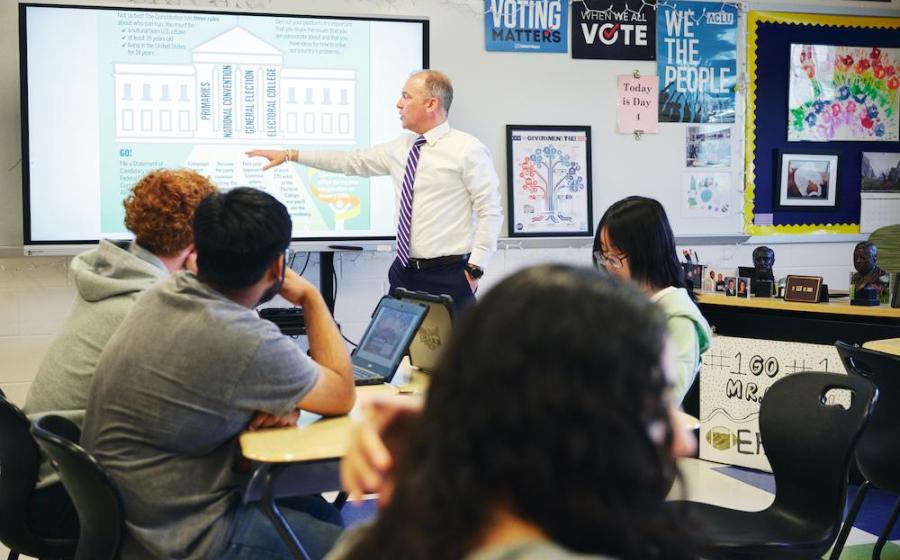
 - The kindergartners in classrooms this year are beginning a once-in-a-generation civic journey. They started school on the eve of the 250th anniversary of the Declaration of Independence. They will reach high school graduation age in 2038, as the nation marks the 250th anniversary of the Constitution’s ratification.
 - A few years ago, as children quickly shifted to online classrooms, parents shared one common question: How does virtual school work? At the time, many families saw it as a temporary fix in response to a global crisis.
 - As the infants and toddlers of the COVID-19 pandemic era enter kindergarten, many educators report unique challenges in this cohort, according to results of a survey conducted by
 - Snowflakes, cozy blankets, and hot cocoa—images of winter often evoke a cheerful glow. Yet for many children, the season’s dimmer days and limited outdoor play can leave them feeling irritable or tired and can even affect their schoolwork.
 - A Michigan university unveils SOAR™, a new smartphone-based degree program that brings college within reach for busy adults — at half the cost.
 - It’s testing season—and students are feeling the pressure. Between midterms, SATs, coursework, and activities, staying focused and confident can be a real challenge.
 - Los avances acelerados en inteligencia artificial (IA) y otras tecnologías emergentes están transformando rápidamente el mercado laboral, con aproximadamente