The Greatest Art Heist in History—And the Secret It May Still Be Hiding
(BookTrib) -
- 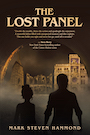 “The Lost Panel” by Mark Steven Hammond
Among the many treasures of Saint Bavo’s Cathedral in Ghent, Belgium, is a massive altarpiece painted by the Renaissance artist Jan van Eyck. Its many panels depict biblical figures, saints, martyrs, prophets, clergy and angels gathered around a pastoral scene at the center, where the Lamb of God bleeds into a golden chalice. It’s an awe-inspiring sight — and, as one of the earliest and most influential masterpieces of oil painting, a defining work in Western art. But what many visitors don’t realize is that the altarpiece, at least in part, is a forgery. One of its panels has been missing for nearly a century, replaced by a meticulously crafted replica.
In April 1934, thieves stole the panel known as "The Just Judges," which remains the greatest unsolved art theft in history. Ransom notes followed. To prove their claim, the thieves returned the reverse side — an image of John the Baptist — while the front vanished completely. Weeks later, a dying man claimed he alone knew the panel’s location, leaving behind cryptic instructions. Investigators pursued the clues, but the painting was never found.
This real-world mystery forms the foundation of Mark Steven Hammond’s "The Lost Panel." While theories about its fate have circulated for decades, Hammond asks a more provocative question: what if it was hidden in plain sight?
The novel opens in 15th-century Bruges, where Jan van Eyck is reimagined as a covert operative embedding secrets within his work. This reframes the altarpiece as more than a religious object — it becomes a vessel for hidden knowledge. The story then shifts to the present day, where a group of historians and researchers is drawn into the long-unsolved mystery. At the center is Ryan, an impulsive but driven protagonist, balanced by Sophia, an art historian whose expertise anchors the investigation. Alongside them are Barbara and Matteo, each contributing specialized knowledge as the mystery expands beyond academic curiosity into something far more dangerous.
What begins as research quickly becomes a high-stakes pursuit. The team follows a trail of historical clues, encoded messages and buried secrets stretching across Europe and into the remnants of wartime history. As they draw closer to the truth, they find themselves in a race against unseen adversaries equally determined to uncover — or control — it.
Hammond balances intellectual puzzle-solving with kinetic action, moving from archival discoveries to high-speed chases. At its core is a compelling idea: in art, meaning is not always visible on the surface. Thematically, the book explores the intersection of faith, power and knowledge, raising questions about who controls history and what is allowed to endure. It also examines legacy — how meaning can be embedded, obscured and rediscovered over time.
What ultimately sets "The Lost Panel" apart is its ability to transform a real-world enigma into a compelling narrative. Hammond doesn’t simply revisit the mystery; he reimagines it, suggesting that what was lost may have been hidden for a reason. Some works of art are not meant to be seen, but to be discovered.
Purchase at https://amzn.to/4u3cGYy.